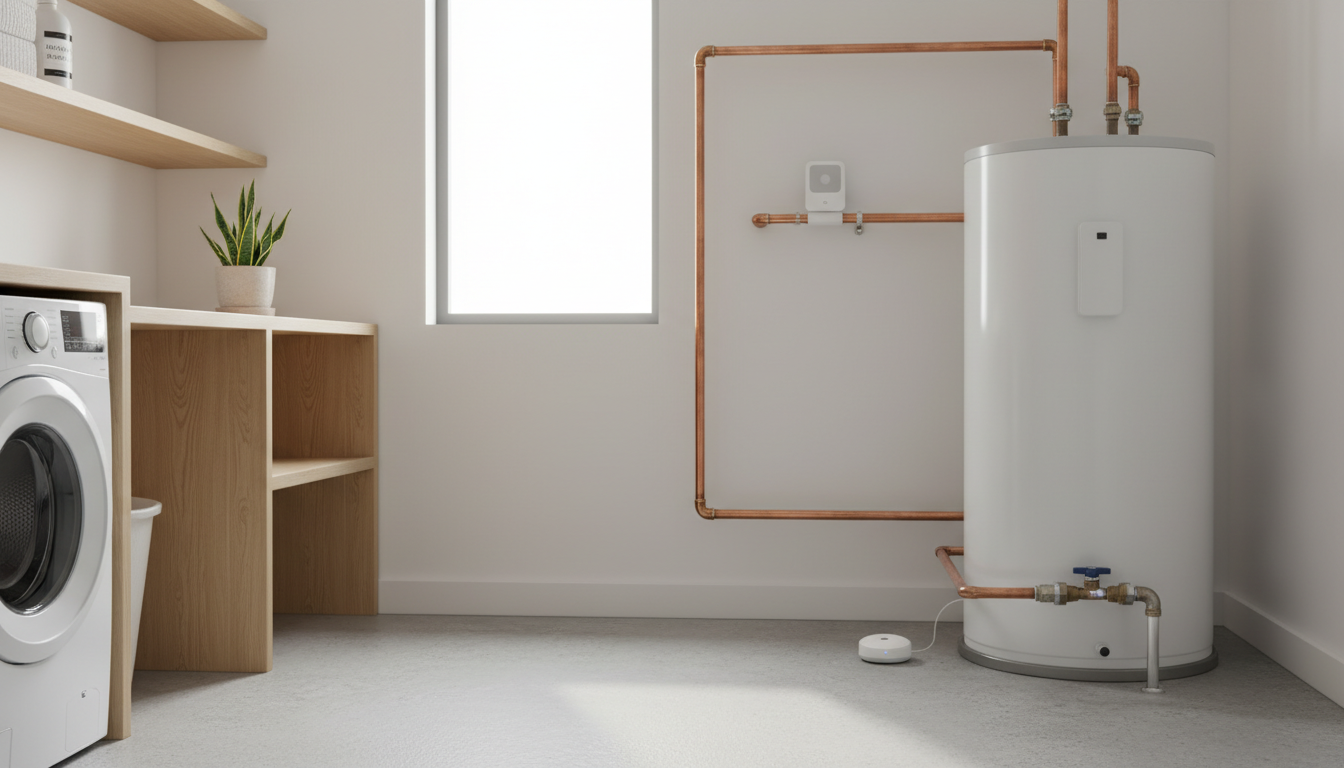
A water leak sensor detects moisture where you place it. A whole-home water monitor tracks flow or pressure through the plumbing it covers and looks for unusual water use. Some systems can also shut off the water, but that is a separate capability—not a feature every sensor or monitor includes.
The right choice depends on what you want to detect. Water pooling beside a washing machine, a slow toilet leak, and a leak inside a supply pipe can call for different kinds of monitoring. No single device detects every source of water in a home.
What is the difference between a water leak sensor and a water monitor?
The key difference is what each device measures: a point sensor looks for water in one place; a flow monitor looks for unusual water movement through covered plumbing.
| Device | What it detects | Typical coverage | Main limitation |
|---|---|---|---|
| Point moisture sensor | Water that reaches its contacts or sensing cable | One selected spot or a local area | It may miss a leak if water never reaches the sensor |
| Fixture-level flow monitor | Flow through one fixture, such as a toilet | One appliance or fixture | It does not monitor the rest of the home |
| External meter or main-line monitor | Flow or water-use patterns at a meter or main line | Plumbing measured by that meter or line | It may flag unusual use without identifying the source |
| In-line whole-home monitor | Flow or pressure through a main pipe; some models include a shutoff valve | Plumbing downstream from its installation point | Coverage depends on plumbing layout; installation may require a plumber |
EPA WaterSense describes these as point-of-use and point-of-entry devices. Point-of-use devices target a fixture or location. Point-of-entry devices monitor water at the meter or where it enters the building. Some systems combine both types. EPA WaterSense’s guide explains the categories and their trade-offs.
What can a point water leak sensor detect?
A point sensor detects moisture when water touches its contacts or sensing cable. It is usually placed near a known risk area, such as a washing machine, water heater, sink, or toilet. Some models have a cable that extends detection along a longer path.

A sensor can sound an alarm or send a notification, depending on the model. Some can connect to a compatible shutoff system, but a notification by itself does not stop the water.
Placement matters. A sensor beside a water heater may alert you if escaping water reaches the floor nearby. It will not necessarily detect a leak behind a wall or under a different appliance. A sensor can only respond to water that reaches its sensing area.
Point sensors can detect some water that a plumbing flow monitor may miss. For example, a sensor near an air-conditioning unit may detect leaking condensate, or one under a sink may detect water from a drain leak. Those sources may not involve water flowing through the home’s supply pipe. EPA WaterSense describes these examples.
How does a whole-home water monitor detect unusual water use?
A flow monitor measures water moving through a meter or pipe. Depending on the system, it may track flow rate, pressure, continuous use, or changes in usage patterns. It can then alert you to activity that might indicate a leak or another irregularity.

This can help with problems a floor sensor might not catch. For example, a toilet can use water continuously without water reaching a sensor on the floor. A flow monitor may flag the ongoing use, depending on its design and alert settings.
“Whole-home” describes the intended scope; it does not guarantee that every pipe or water source is covered. A monitor only tracks plumbing measured at its installation point. A separate irrigation line, detached building, or branch that bypasses the monitor may fall outside its coverage. Check the device specifications against your home’s actual plumbing layout.
A flow alert is a clue, not a diagnosis. The monitor may detect unusual use without identifying the exact fixture. And because it measures water use—not moisture wherever it appears—it may miss a roof leak, air-conditioning condensate, or water escaping from a drain pipe. EPA WaterSense outlines the coverage and limitations of different monitors.
How might each device respond to a common leak?
| Situation | Point sensor | Flow monitor | What to keep in mind |
|---|---|---|---|
| Washing-machine supply hose leaks | Alerts if water reaches a sensor placed nearby | May flag unusual flow through covered plumbing | The monitor may not identify the washing machine as the source |
| Toilet runs continuously | A floor sensor may stay dry | A fixture-level or main-line monitor may flag continued use | Detection depends on the system and its alert settings |
| Sink drain leaks or AC condensate escapes | May alert if placed where water collects | Usually will not detect water that does not pass through the monitored supply line | Sensor placement is important |
| Hidden supply-pipe leak | May miss it until water reaches the sensor | May flag unusual flow if the leak is downstream and meets alert criteria | A flow alert may not pinpoint the leak |
| Irrigation line leaks | May detect water only if a sensor is placed where it reaches | May monitor it if the irrigation line passes through the device’s monitoring point | Confirm whether the system covers outdoor use |
No row is a guarantee: the result depends on the specific device, its placement, alert thresholds, and the home’s plumbing.
Does a water leak detector shut off water automatically?
Sometimes. Detection, notification, and shutoff are separate functions. A basic sensor may only sound an alarm. A connected device may also send an alert. A system can shut off water only if it has a compatible valve, and some setups require a person to act on the alert.
Before choosing a shutoff system, check whether the valve is included, what plumbing it controls, and whether the installation fits your pipes. In-line equipment may require a plumber. The EPA also advises ensuring that a shutoff system will not interfere with a home fire-protection sprinkler system. See EPA WaterSense’s selection and installation guidance.
Which type of water leak monitor fits your home?
- You want to watch one known risk area. A point sensor may suit an appliance, water heater, or sink cabinet.
- You want alerts about unusual water use. Consider a flow monitor, and confirm exactly which plumbing branches it covers.
- You rent or cannot change the plumbing. A standalone sensor may be simpler to place. Ask your landlord before installing a valve or modifying plumbing.
- Your home is often unoccupied. Check how alerts reach you when you are away and whether the system can shut off water.
- You want to monitor different kinds of risks. Point sensors and a flow monitor can complement each other. One looks for moisture in selected locations; the other watches water use in covered plumbing.
Some water utilities also offer meter data or high-use alerts through an online account. Check whether that option is available before buying a separate monitor. Utility alerts can be useful, but their timing varies; EPA notes that some meter alerts may lag by days, so they may not provide the same response as an in-home device. EPA WaterSense explains utility meter alerts.
What should you check before choosing a device?
Start with the specific problem you want to notice. Then compare:
- Coverage: Does the device detect moisture at one spot, monitor one fixture, or track flow through a section of plumbing?
- Alerts: Does it sound locally, send an app notification, or offer another alert method? Will someone notice when away?
- Shutoff: Is a valve included or compatible? Does the system shut off automatically or wait for a person?
- Installation: Does it require a plumber, nearby power, Wi-Fi, or a compatible hub?
- Power and connectivity: Will it continue to alert during an outage? What happens if the internet connection changes?
- Settings: Can you adjust alerts for irrigation schedules, seasonal changes, or an unoccupied home?
- Maintenance: Does the manufacturer require sensor cleaning, battery replacement, testing, or flow-monitor calibration?
Leak-detection devices are not eligible for the WaterSense label. EPA says some products may be certified to ANSI/CAN/IAPMO Z1349, a standard for devices that detect, monitor, or control plumbing systems. Certification can help you assess tested features, but it does not mean a device will catch every leak. Check the documentation for the specific model. See EPA WaterSense’s certification guidance.
Can leak-detection devices reduce water waste?
They can help you notice a leak or unusual water use sooner. But a device does not repair the problem or guarantee a lower water bill. Water savings depend on what the system detects and how quickly the problem is addressed. EPA WaterSense says expected savings are difficult to quantify because leaks and household water use vary. Read the EPA’s guidance on savings and maintenance.
Follow the manufacturer’s instructions to test and maintain the system. WaterSense recommends checking installed leak-detection and flow-monitoring systems at least once a year. EPA Home Maintenance guidance.
If you suspect an existing leak, use the GreenerPulse home water audit to check household water use and look for hidden leaks. If you are deciding which water-efficiency change to make next, see Home Water Efficiency: What to Improve First.
Frequently asked questions
Is a water leak sensor the same as a water monitor?
No. A point sensor detects moisture at a particular location. A flow monitor tracks water moving through plumbing and looks for unusual use. Some systems combine monitoring, local sensors, and a shutoff valve.
Can a whole-home monitor detect every leak?
No. It monitors water use within its coverage. It may miss water that does not pass through the monitored plumbing, such as a roof leak or a leaking drain. Its coverage also depends on its installation point and your plumbing layout.
Do I need both point sensors and a whole-home monitor?
Not necessarily. A point sensor covers a selected location; a flow monitor looks for unusual activity in covered plumbing. A combined setup may suit a home where both types of risk matter.
Does a water leak detector automatically shut off water?
Not always. Some devices only sound an alarm or send a notification. Check whether the system includes a compatible shutoff valve and whether shutoff happens automatically or requires you to act.